Why a dryer takes two cycles to finish a load
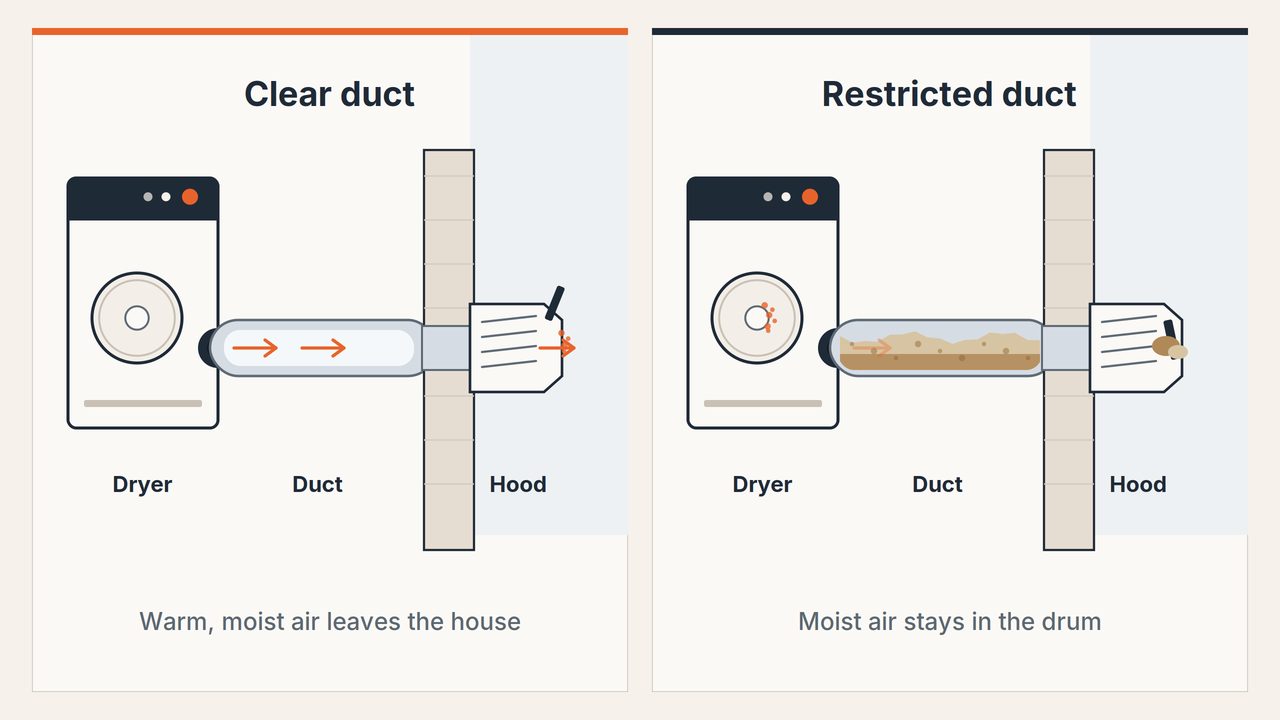
A normal load should be dry when the cycle ends. When the same towels need a second run, or the dryer is still going past an hour, the machine is usually still making heat. The moisture is not leaving.
The drawing above is the same setup both ways. On the left the duct is open and the hood flap is up. On the right lint fills the duct, the flap barely moves, and the moist air never gets out.
How the moisture gets out
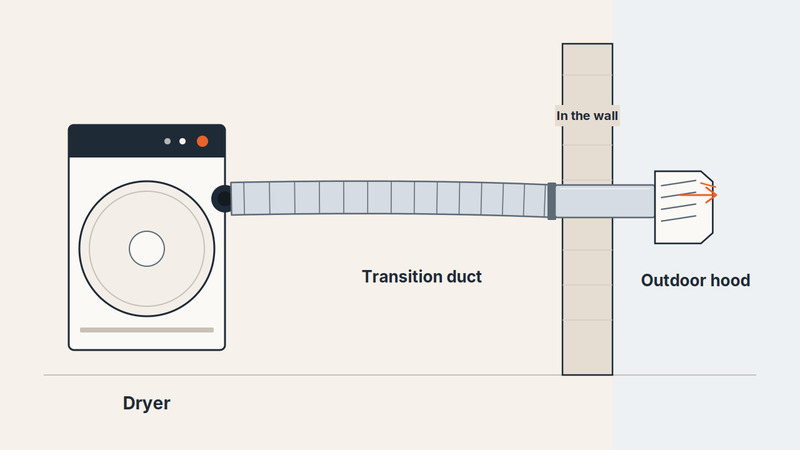
The drum tumbles clothes in warm air. That air picks up water from the fabric. A blower pushes the warm, wet air out the back of the dryer, through the short connector, into the duct in the wall, and out the hood on the outside of the house. The flap or the louvers open while air is moving. They close when the dryer stops, so outside air does not blow back in.
When that path is open, the moisture leaves and the clothes dry. When the path is pinched or packed, the wet air stays in the drum. The heater keeps working. The cycle ends with damp clothes, and you start it again.
A dryer that never gets warm is a different problem. This one is a dryer that runs hot and still leaves the load damp.
What slows the air
The lint screen catches the pieces you can see. Finer lint travels with the air and settles where the flow slows down.
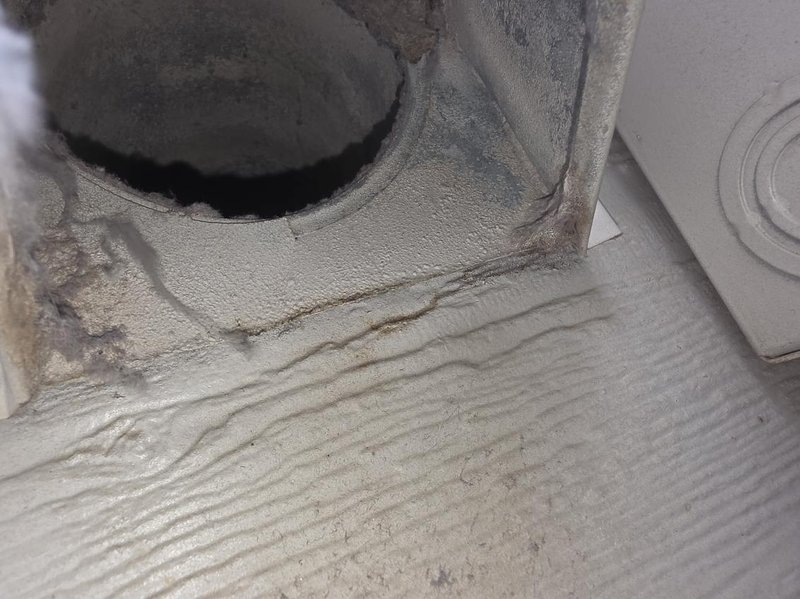
Lint in the duct. It coats the inside of the pipe a little at a time. The dryer still runs. It just takes longer. This is the usual reason a machine that used to finish a load now needs two.
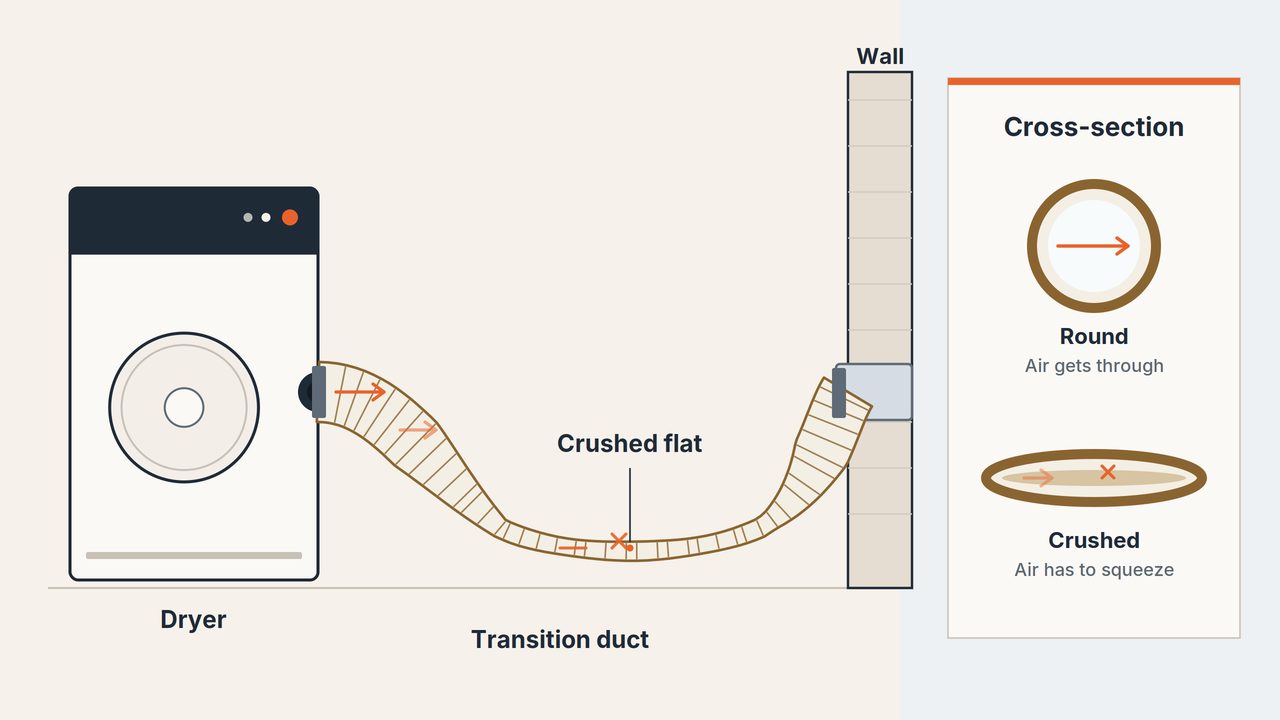
A crushed or kinked connector. The short piece between the dryer and the wall flattens when the machine is pushed back in. A flat spot is a pinch, even when the pipe in the wall is clear. Thin foil and vinyl hose crush more easily than a short metal connector. See the duct behind the dryer.
A long run, or several elbows. Each turn slows the air, and lint settles in the bend. A laundry room in the middle of the house, or a duct that climbs to the roof, has more pipe than a dryer sitting on an outside wall. Both are common in Boulder, Longmont, Louisville, Lafayette, Superior, and Erie. A run past roughly 15 feet, or one that turns more than twice, is the difficult clean. See roof versus ground.
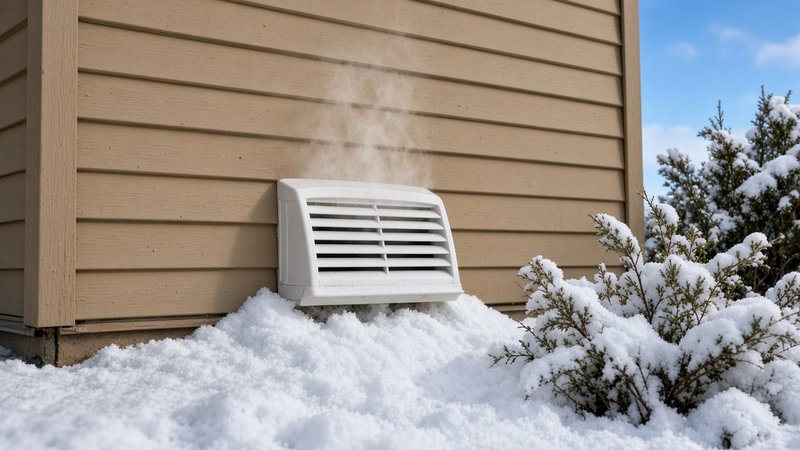
A hood flap that is stuck or packed. The outdoor hood is the last opening. Lint can hold the flap shut, and louvers that will not swing keep the exhaust in the duct. A ground-floor hood is visible from the yard. How to check the outdoor hood is a short walk. Snow piled against a low hood blocks the exit the same way. After a storm, that check is in get the vent ready for a Colorado winter.
A roof vent. Some homes exit on the roof instead of a side wall. You often cannot see the cap from the ground. Do not climb up to check it. Long dry times with a roof exit are a reason to book the visit.
What you can check yourself
Clean the lint screen. Pull it out, clear it, and seat it again before the load. A full screen is its own restriction. Cleaning the screen does not clear the duct. It only keeps the screen from adding to the problem.
Feel for air at the outside hood. Run a heated cycle. At a ground-floor or side-wall hood you should feel warm air, and the flap or louvers should be open. Little or no air, with a clean screen, means the restriction is in the duct or the connector. Stay off the ladder and off the roof for this.
Look at the connector. Slide the dryer out just far enough to see the hose. It should be round the whole way, not flat, kinked, or piled in a loop. On a gas dryer, do not pull, kink, or stretch the gas connector. If you smell gas, stop and leave it alone.
Longer cycles use more energy
A second cycle runs the heater and the motor again for the same clothes. An electric dryer uses more electricity. A gas dryer uses more gas.
The longer run is also a warning. Lint is fuel, and a duct that holds heat in the machine is holding that lint next to it. Clothes that need two cycles, a dryer top that is hot to the touch, and no air at the hood are the same restriction at different points. If the top of the dryer is hot to the touch, unplug it and leave it until the duct is cleared. Dryer vents and fire risk and five signs your duct is packed go further on those signs.
When to call
If the screen is clean, the hood is clear, and a normal load still needs a second cycle or runs past an hour, the restriction is in the duct you cannot see. Cleaning that full run is the visit.
Book when dry times stretch, when the outdoor hood has little airflow, when the connector is crushed, or when it has been about a year. Timing is in when to clean a dryer vent in Boulder County. Published prices are $129 for a standard ground or side-wall clean and $169 for a roof, upper-floor, or long run. A new duct, cap, or dryer part is not in the flat rate. What the price includes is the clean, a basic inspection, an airflow check, and photos.
Book
Fixed prices, real availability, book and pay online: Book a visit. Or call (720) 605-3198. Serving Boulder, Louisville, Lafayette, Longmont, Superior, and nearby Boulder County towns.
Recognise your laundry room in this?
Two taps for your price and a request for this week’s openings.