Get your dryer vent ready for a Colorado winter
A Colorado winter asks more of a dryer vent than a summer does. The air leaving the dryer is warm and full of moisture. Outside, Front Range nights drop below freezing, and a storm can bury a low hood before the next load. A short walk outside, plus a look at the connection behind the dryer, tells you whether the duct can still move air.
Clear snow off a low side-wall hood
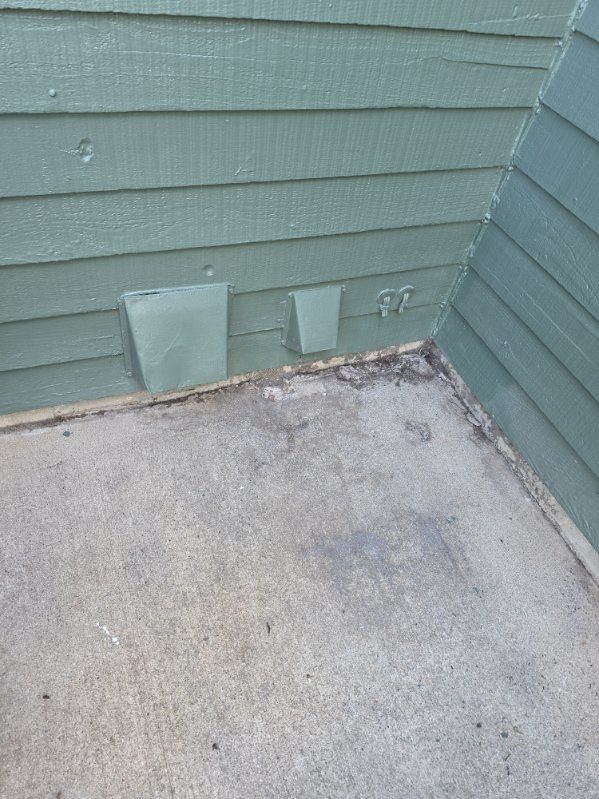
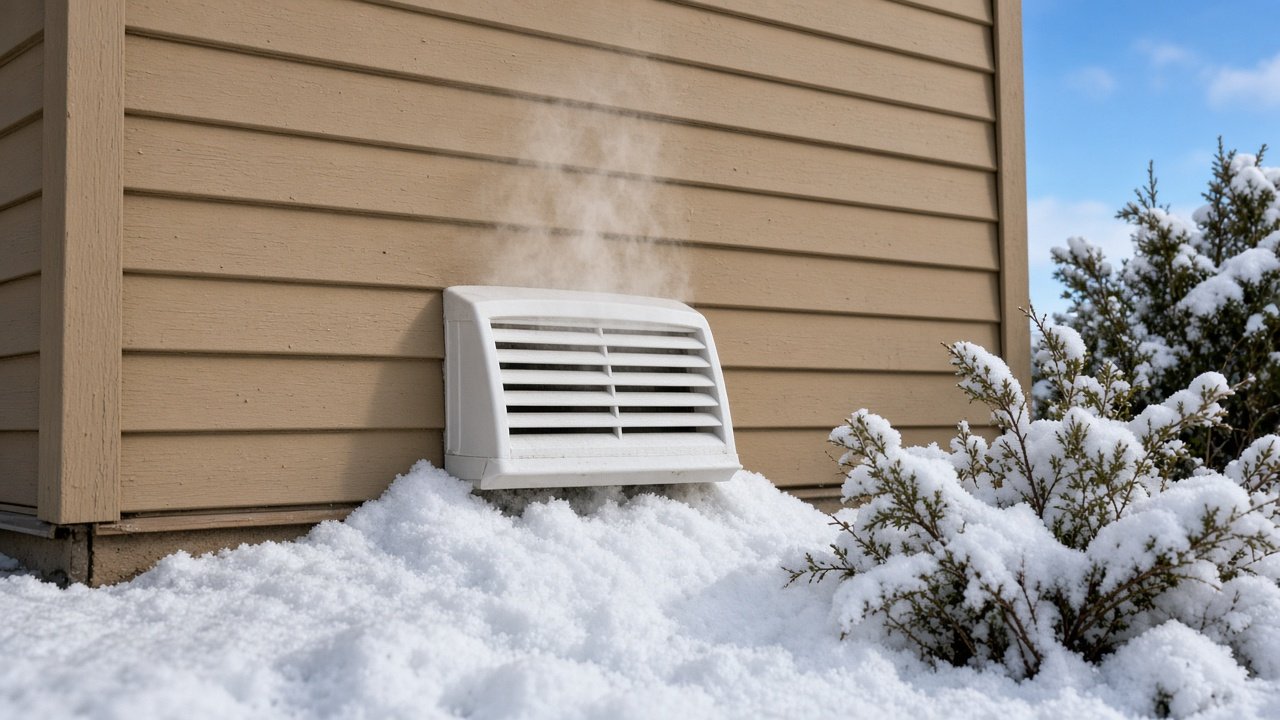
Most homes in Boulder, Louisville, Lafayette, Longmont, Superior, and nearby Boulder County towns exit through a hood on a ground-floor side wall. That opening sits where drifting snow collects. A drift can cover the louvers completely, and snow piled against the wall blocks exhaust the same way a lint plug does. Warm, wet air then backs up into the laundry room.
After each storm, clear snow away from the hood so the louvers or flap can open. Do not leave a pile sitting against the vent. If you run a short cycle once the opening is clear, you should feel air leaving the hood. No air, with the hood clear of snow, means the blockage is farther up the duct.
Thaw a flap that has iced shut
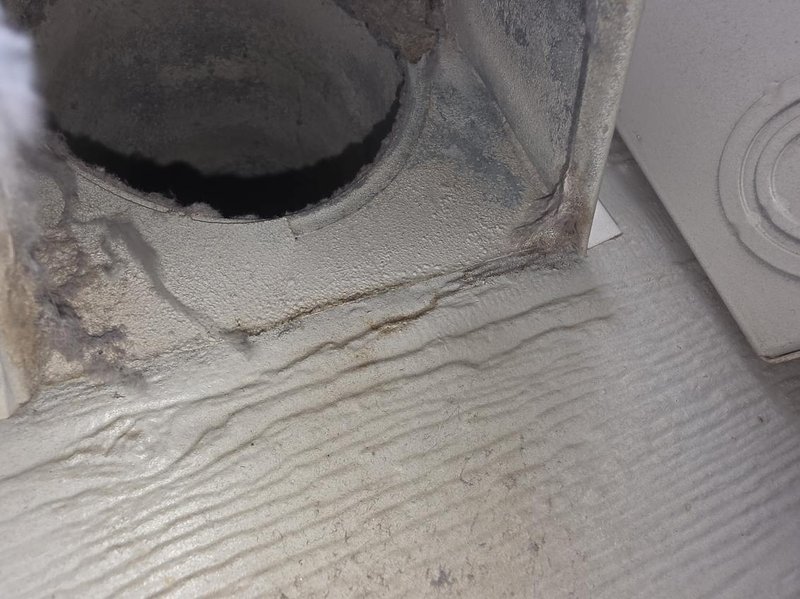
Exhaust moisture freezes. On a cold night it can glaze a metal flapper and hold the door shut. Lint already stuck to the flap makes that more likely. The door does not seat cleanly, and ice has a rough edge to grip. You may hear the dryer running and feel little or no air outside.
Thaw the flap gently. A little warm water is enough, or the dryer's own exhaust once the door can move. Do not chip the ice. Do not pry the flap with a screwdriver, knife, or other sharp tool. Those bend the metal, and a bent flap sticks worse the next time it freezes.
Watch for water in a cold duct run
A long duct that passes through an unheated garage, attic, or crawlspace cools the exhaust before it reaches the outdoors. Water condenses on the inside of the pipe. Wet lint clumps and sticks to the duct wall instead of blowing out the hood.
Two signs show up at the dryer. Water drips at the dryer or at the wall connection, and lint pulled from the transition hose feels damp instead of dry and fluffy. A short run that stays inside heated walls has less of this problem. A long run through a cold space keeps collecting wet lint until the duct is cleaned. Drips and damp lint are a reason to book a clean, not a reason to keep running loads through a wet pipe.
Keep the dryer vented outdoors
Dry Colorado winters make it tempting to point the dryer into the laundry room for a little humidity. Do not do that.
A gas dryer produces carbon monoxide. It has to vent outdoors through the whole heating season, not only in mild weather. An electric dryer does not produce carbon monoxide, but an indoor vent kit still pushes moisture and fine lint into the house. That moisture shows up on windows and cold walls, and the lint settles in the room. The outdoor hood, cleared of snow and ice, is the exit to use all winter.
When to book a clean
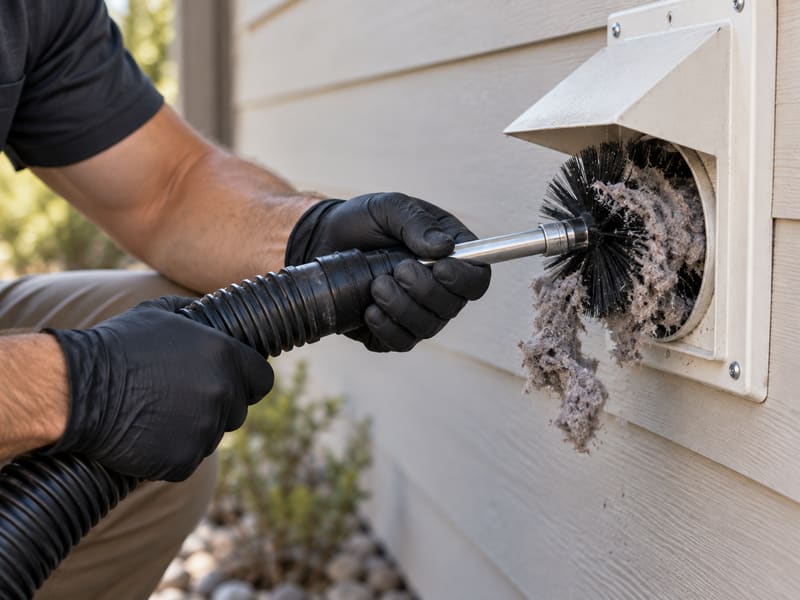
Book when the flap stays stuck after a gentle thaw, when water shows up at the dryer connection, when lint at the hood is heavy or damp, or when it has been a year or more since a full clean. Published prices are $129 for a standard ground or side-wall clean and $169 for a roof, upper-floor, or long run.
Book
Fixed prices, real availability, book and pay online: Book a visit. Or call (720) 605-3198. Serving Boulder, Louisville, Lafayette, Longmont, Superior, and nearby Boulder County towns.
Recognise your laundry room in this?
Two taps for your price and a request for this week’s openings.