The duct behind the dryer: foil hose, semi-rigid, or rigid metal
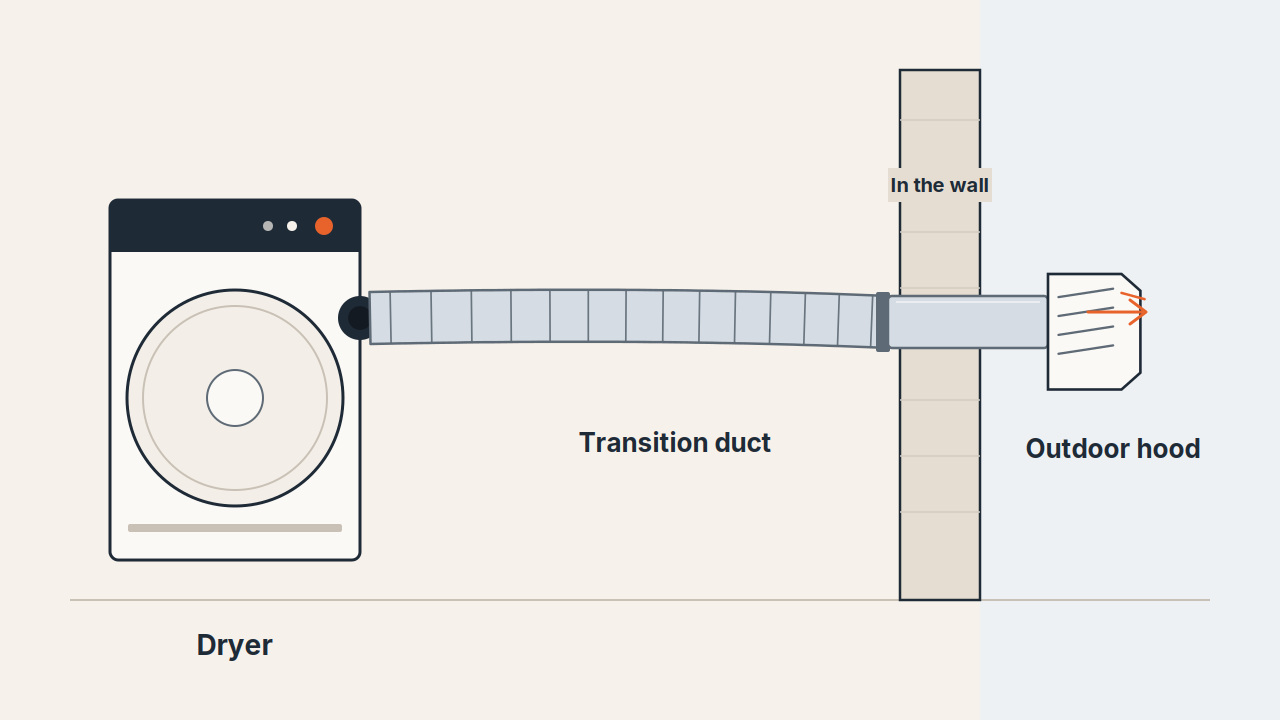
The lint screen is only the start of the vent. The short piece between the back of the dryer and the duct in the wall is where airflow gets pinched, and it is the piece you can see without tools. In Boulder, Longmont, Louisville, Lafayette, Superior, Erie, and the other towns in Boulder County, that connector is often a foil or vinyl hose left from the day the dryer was installed.
Three kinds of duct
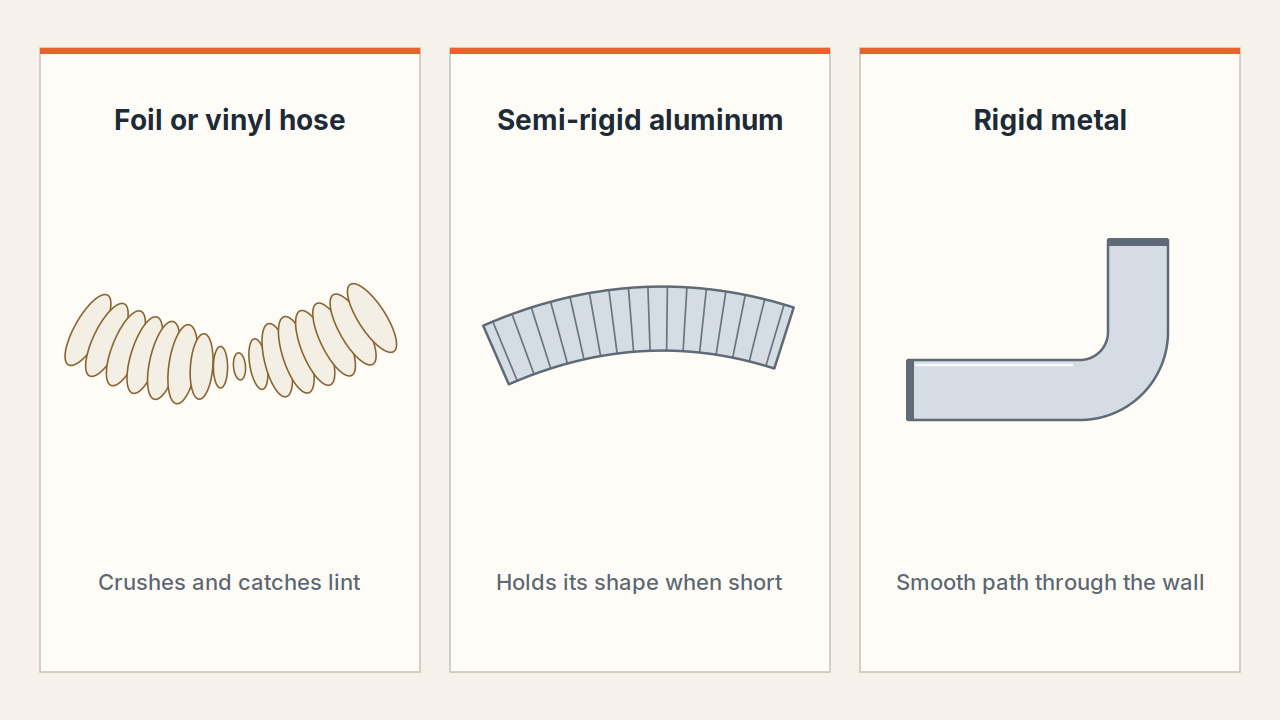
Foil or vinyl accordion hose. Thin, stretchy, and ridged, either shiny foil or white plastic, with a wire holding the shape. It crushes when the dryer is pushed to the wall, and the ridges give lint a ledge. The U.S. Consumer Product Safety Commission says to replace plastic or foil accordion-type ducting with rigid or corrugated semi-rigid metal duct. The thin hose traps lint, and it kinks or crushes, which cuts airflow. White plastic or vinyl is a red flag. It is not a metal duct. See CPSC Publication 5022.
Semi-rigid aluminum. Corrugated aluminum that stays round when you extend it. This is the usual short connector when the dryer cannot sit flush to the wall. It still has ridges, so keep it short and where you can reach it. Fully stretched, it is a different thing from a crushed foil hose.
Rigid metal. Smooth-wall pipe, with an elbow where the run has to turn. This is what belongs inside the wall and on a straight shot outdoors. Lint has less to grab.
What the rules actually say
The model International Residential Code, section M1502, is the usual starting point for a clothes dryer exhaust. Towns adopt their own editions and local changes. These notes are that model text, not a claim that every Boulder County town has adopted these words.
The exhaust duct, the one built into the house, is metal with a smooth interior, not less than 0.0157 inch thick (No. 28 gage), and 4 inches nominal in diameter. The transition duct, the single connector from the dryer to that pipe, has to be listed and labeled to UL 2158A, one length, not greater than 8 feet, and not concealed inside the wall. A foil connector with a real UL 2158A label can meet that transition rule. A vinyl hose, or a foil hose with no listing mark, does not.
The dryer's manual can be stricter, and the code starts from the manufacturer's instructions. Whirlpool's electric dryer installation instructions (document W10676165) say to use only a 4-inch heavy metal vent and clamps, not plastic or metal foil. Flexible metal on that sheet is allowed only if you can still reach it to clean it: fully extended, supported, extra length removed so it does not sag or kink, kept out of walls, ceilings, and floors, and no longer than 7 3/4 feet. The same sheet says to replace plastic or metal foil vents. Read the manual for the dryer you own.
Look behind the dryer
Slide the machine out just far enough to see the connector. On a gas dryer, do not pull, kink, or stretch the gas connector. If you smell gas, stop and leave it alone.
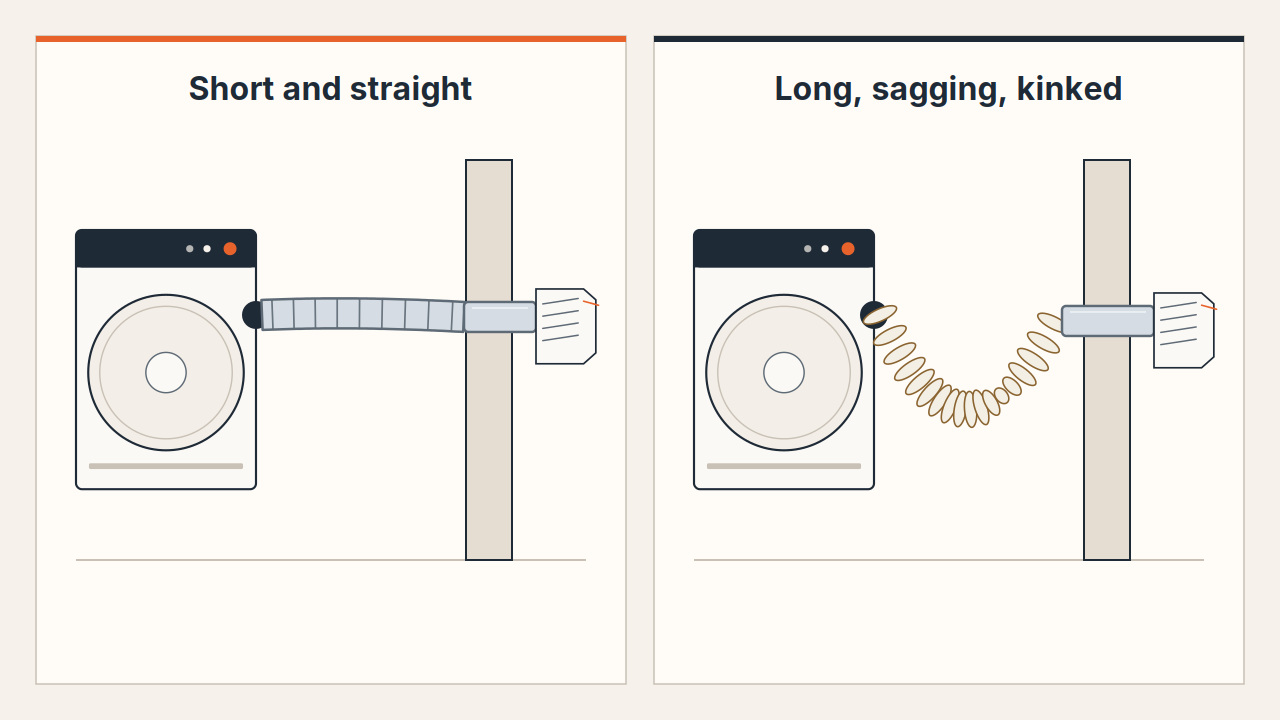
- Round, or crushed. It should be round the whole way. A flat spot, a sharp kink, or a section mashed against the wall is a pinch.
- No spare loop. Extra hose coiled on the floor is not useful slack. It sags, and the sag fills with lint. Use only the length the gap needs.
- Material. White plastic or vinyl gets replaced. Thin foil with no UL 2158A mark printed on it is the hose the CPSC says to swap for rigid or semi-rigid metal.
- Short and straight. The model code stops the transition duct at 8 feet and keeps it out of the wall. One method for the exhaust duct beyond it caps that run at 35 feet, not counting the transition piece, and each elbow shortens the allowance. Your dryer manual can set a different number.
- Screws that stick into the pipe. A screw through the joint leaves a point in the airstream, and lint catches there. The model code bars fasteners that protrude more than 1/8 inch into the duct. The Whirlpool sheet goes further: no screws that extend into the duct and catch lint, and no duct tape. A metal clamp on the outside of the joint does not put a hook in the airflow.
The hose is not the whole vent
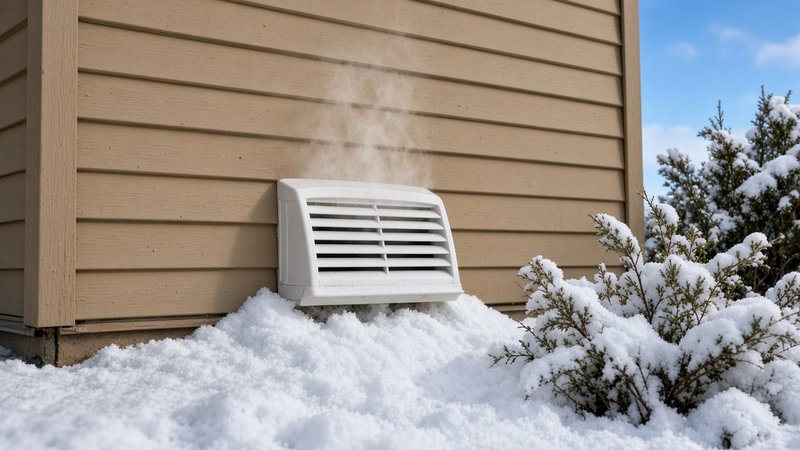
A tidy connector does not mean the pipe in the wall is clear. Longer dry times, a hot dryer top, or little air at the outdoor hood mean the blockage is farther along. See five signs your duct is packed, how to check the outdoor hood, and dryer vents and fire risk. Snow on a side-wall hood is a separate check: get the vent ready for a Colorado winter.
Replacing a crushed hose is a homeowner job when you can reach both ends and a gas connector is not in the way. Cleaning the full run, from the dryer out to the hood, is the visit.
When to book
Book a clean when the connector is crushed, when you cannot tell if the duct in the wall is open, when the outdoor hood is stuck or packed, or when it has been about a year. Timing is in when to clean a dryer vent in Boulder County. Published prices are $129 for a standard ground or side-wall clean and $169 for a roof, upper-floor, or long run. Pick the tier from roof versus ground. A new duct, cap, or dryer part is not in the flat rate. What the price includes is the clean, a basic inspection, an airflow check, and photos.
Book
Fixed prices, real availability, book and pay online: Book a visit. Or call (720) 605-3198. Serving Boulder, Louisville, Lafayette, Longmont, Superior, and nearby Boulder County towns.
Recognise your laundry room in this?
Two taps for your price and a request for this week’s openings.