The lint screen and the dryer vent are different jobs
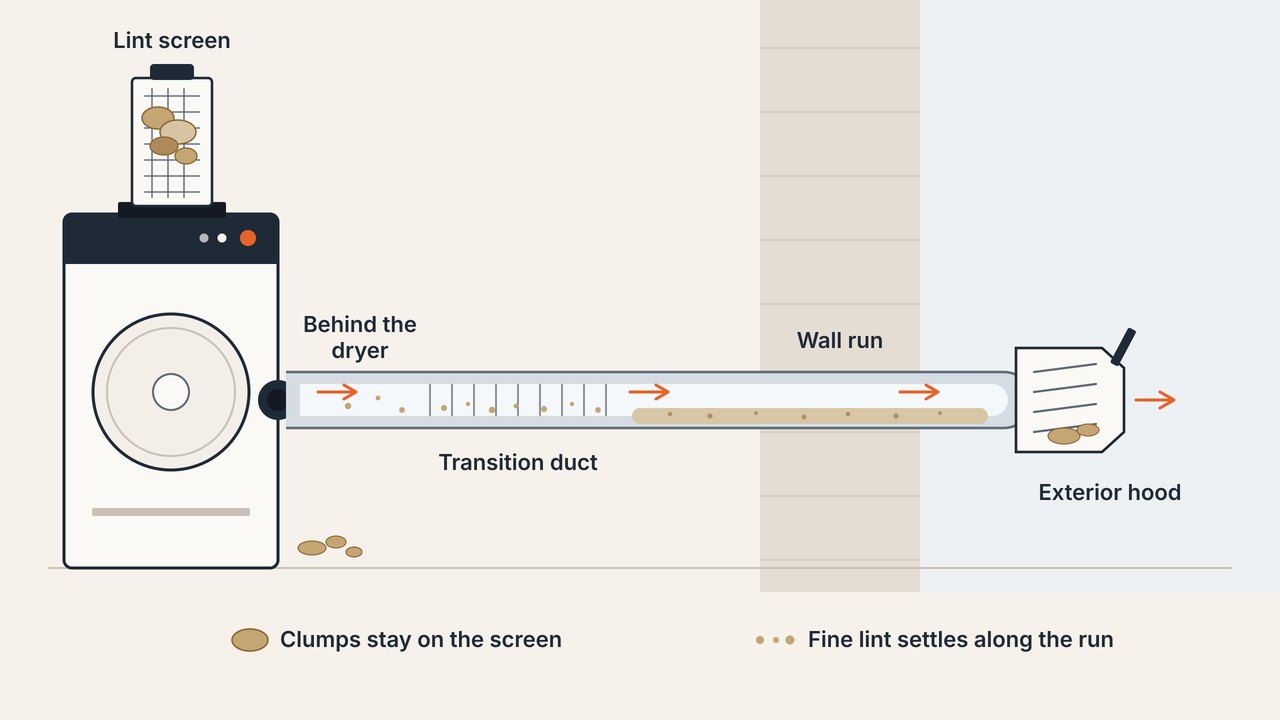
Emptying the lint screen is the right habit before a load. It is a different job from cleaning the dryer vent. The screen sits in the dryer. The vent is the path that starts behind the machine and ends at the hood on the outside of the house.
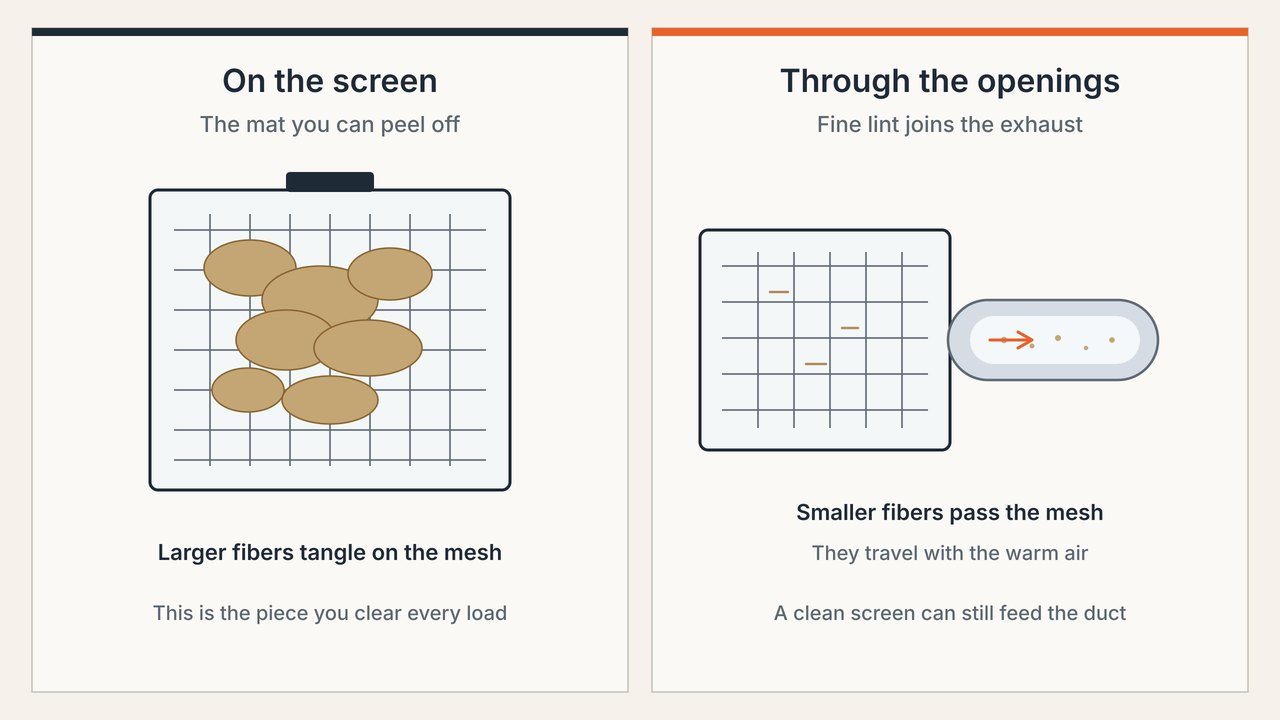
The drawing above follows that path. Clumps sit on the screen. The finer lint keeps going.
What the screen catches
The lint screen is a mesh in the door or in a slot on top of the cabinet. Air leaving the drum passes through it. Fibers large enough to tangle on that mesh stay there. That is the mat you peel off in one piece, and it is most of the lint you can see.
A full screen is its own restriction. Air has to push through the mat before it can leave the drum. The National Fire Protection Association says to clean the lint filter before or after each load, and to run the dryer with a filter in place. Those steps are on the NFPA clothes dryer safety tip sheet.
What slips past the screen
The mesh has openings. Fibers smaller than those openings travel with the air. So does lint that breaks apart as the load tumbles. A screen you just cleared can still send a fine haze into the duct.
Dryer sheets can leave a thin film on the mesh. The screen looks empty, and the film closes some of the openings, so less air gets through. Wash the screen in warm water. A soft brush helps if the film is stubborn. Let it dry fully, then put it back. A wet screen drips into the cabinet.
Where that lint builds up
After the screen, the exhaust has four places it commonly slows down. Lint settles where the air slows.
Behind the dryer. The gap between the cabinet and the wall collects lint that missed the duct, and lint that leaked at a loose joint. Slide the machine out just far enough to look. On a gas dryer, do not pull, kink, or stretch the gas connector. If you smell gas, stop and leave it alone.
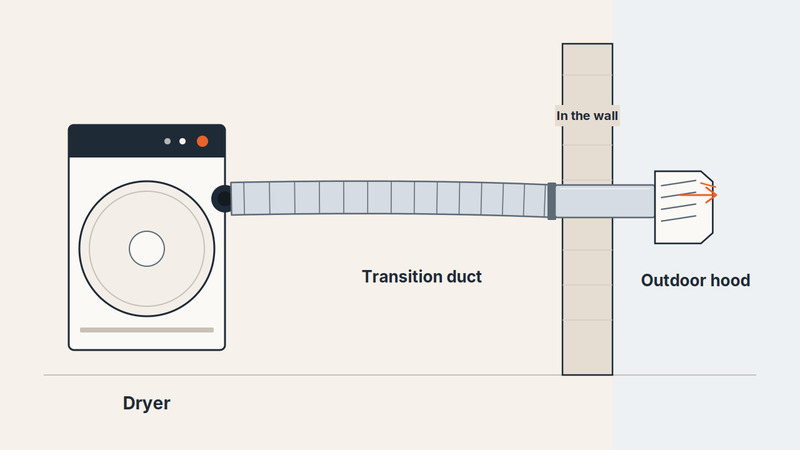
The transition duct. This is the short connector from the back of the dryer to the pipe in the wall. Ribs, a sag, or a flat spot give lint a ledge. A crushed connector is a pinch even when the screen is clean.
The wall run. This is the duct inside the wall or the ceiling. It is hidden from the laundry room. Elbows and long stretches slow the air, and lint coats the inside a little at a time.
The exterior hood. The flap or the louvers are the last opening. Lint collects in the mouth and can hold the flap nearly shut, so the exhaust stays in the pipe. A ground-floor hood is a short walk. How to check the outdoor hood covers what to look for. Stay off the ladder and off the roof.
Along the Front Range
Boulder County is dry for much of the year. Dry air and tumbling fabric make static, and fine lint clings to clothes and to the inside of a duct. A clear screen is still worth doing every load. The fine lint in the pipe is a separate cleanup.
Townhomes and condos in Boulder, Louisville, Lafayette, Longmont, Superior, Erie, and Broomfield often place the laundry away from an outside wall. The duct then runs farther, or it turns more than once, before it reaches a side-wall hood or a roof. More pipe is more surface for that fine lint to coat. A dryer on an outside wall is a shorter run than a laundry room in the middle of a townhome. Why a dryer takes two cycles is what that restriction feels like from the laundry room.
Habits that stay with you
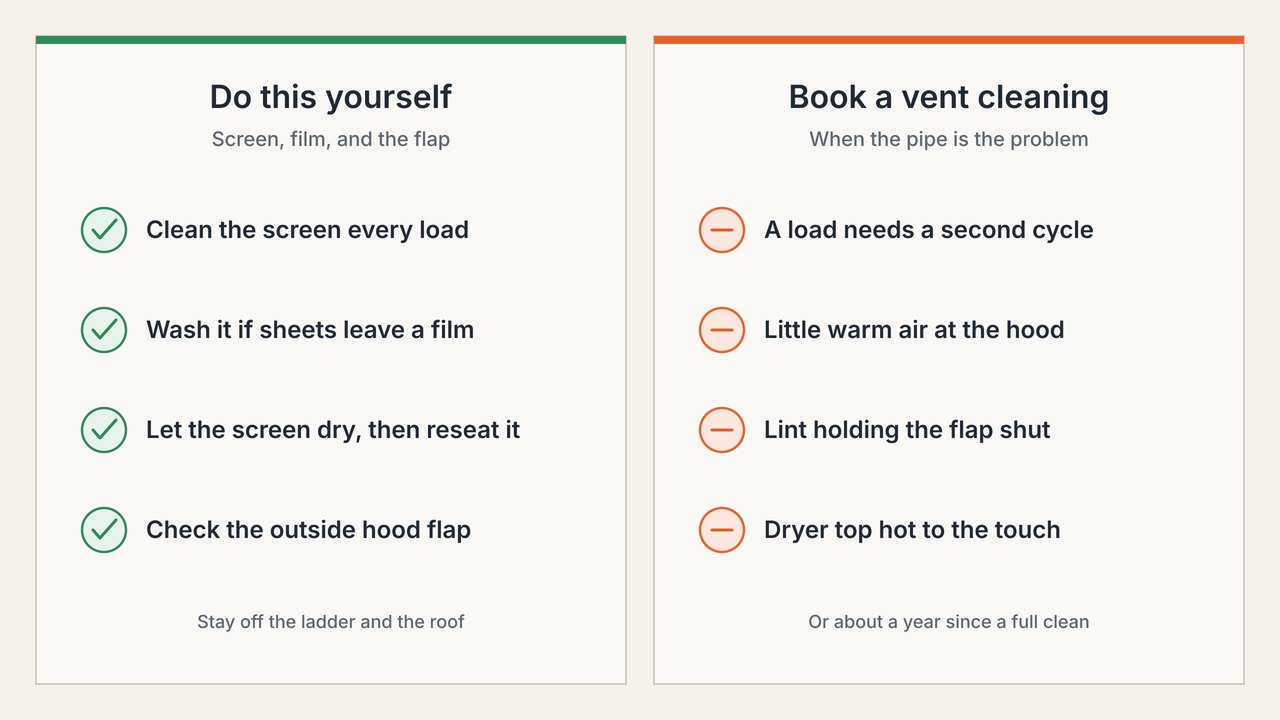
Clean the screen every load. Pull it, clear it, and seat it again before you start the dryer. This takes a few seconds. It keeps the screen from adding a blockage of its own.
Wash the screen when dryer sheets leave a film. If the mesh looks shiny, or a load slows down even though you empty the screen every time, wash it in warm water and let it dry before it goes back.
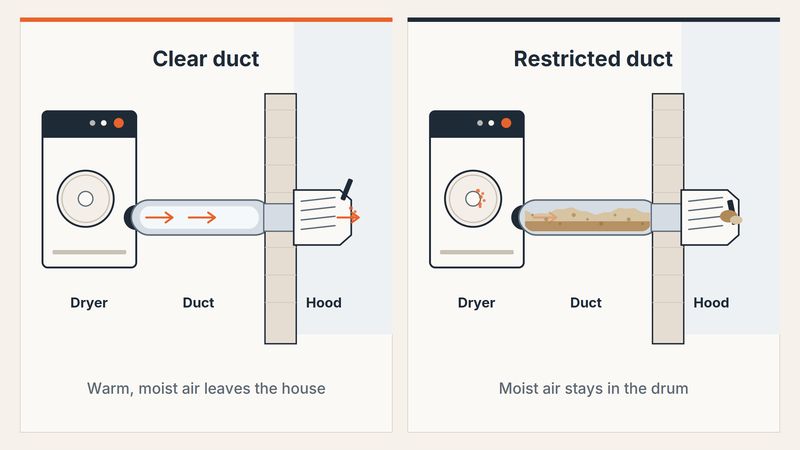
Check the outside hood flap. Run a heated cycle. At a ground-floor or side-wall hood, the flap or the louvers should open, and you should feel warm air a few inches out. Weak air, with a clean screen, means the restriction is in the duct or the connector.
When the vent itself needs a cleaning
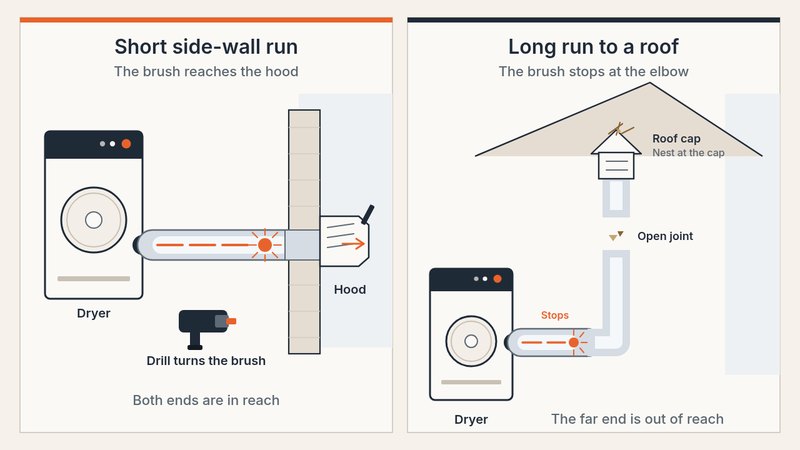
The screen job is yours every load. The vent job is the full run, from the connector through the wall to the hood. That is dryer vent cleaning.
Book a clean when any of these show up:
- A normal load needs a second cycle, or it runs past an hour, and the screen is already clean.
- A ground-floor hood you can reach has little warm air, or the flap stays shut.
- Lint is piled in the mouth of the hood.
- The top of the dryer is hot to the touch. Unplug it and leave it until the duct is cleared.
- It has been about a year since the vent was cleaned.
The NFPA tip sheet says to keep the exhaust pipe open and to check that the outdoor flap opens while the dryer runs. Once a year, or sooner when clothes take longer than they used to, clean the lint out of the vent pipe or have a dryer lint removal service do it. The same sheet is linked above.
Published prices are $129 for a standard ground or side-wall clean and $190 for a roof, upper-floor, or long run. You see which price applies before you book. After the first visit, the annual plan is $109 for the next standard clean if you stay enrolled. A new duct, cap, or dryer part is not in the flat rate. See pricing for the two tiers.
Book
Fixed prices, real availability, book and pay online: Book a visit. Or call (720) 605-3198. Serving Boulder, Louisville, Lafayette, Longmont, Superior, and nearby Boulder County towns.
Recognise your laundry room in this?
Two taps for your price and a request for this week’s openings.